
Naturopathic Medicine
The Six Principles
Naturopathic medicine celebrates the healing power of nature. Naturopathic medicine is dedicated to the study and celebration of nature’s healing powers. It is as old as healing itself and as new as today’s medical breakthroughs. It is a dynamic philosophy as well as a profession that recognizes the interconnection and interdependence of all living things. It utilizes the most natural, least invasive and least toxic therapies to treat illness and to promote wellness by viewing the body as an integrated whole.
Naturopathic medicine is defined by principles rather than by methods or modalities. Above all, it honors the body’s innate wisdom to heal.
Naturopathic Principles:
Naturopathic physicians practice the six fundamental principles of naturopathic medicine: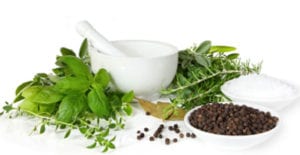
- The Healing Power of Nature: Trust in the body’s inherent wisdom to heal itself.
- Identify and Treat the Causes: Look beyond the symptoms to the underlying cause.
- First Do No Harm: Utilize the most natural, least invasive and least toxic therapies.
- Doctor as Teacher: Educate patients in the steps to achieving and maintaining health.
- Treat the Whole Person: View the body as an integrated whole in all its physical and spiritual dimensions.
- Prevention: Focus on overall health, wellness and disease prevention.
Acupuncture & Chinese Herbal Medicine
The Philosophy & Principles of Acupuncture:
The Chinese postulated that there is an energy flow in every living being that is responsible for life. They called this energy the Qi force. This energy is analogous to the Indian concept of ‘prana’ or life force and permeates all creation. The Qi flows through the body in channels called acupuncture meridians. Every meridian influences an organ and there are different meridians for the heart, liver, lung, large intestine, stomach, kidney, urinary bladder etc.
Some acupuncture meridians are negative in orientation while others are positive in orientation. The Chinese call these the Yin and the Yang. Yin and Yang are relative terms in comparison with each other. Just as there is no darkness without light, no white without black there is no Yin without Yang and vice versa. Yin and Yang are also considered to be female and male respectively and both of these contain some amount of the opposite principal. Represented by the famous yin-yang and symbol.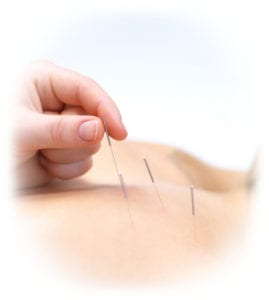
The Yin meridians originate in hollow organs like the stomach, large intestine, small intestine, urinary bladder and the gall bladder. The Yang Meridians originate in solid organs like the heart, lung, liver, kidneys, and spleen.
In a person who is healthy, the Qi flows through all the channels smoothly and the Yin and Yang are in a state of dynamic equilibrium. This means that even though there are temporary fluctuations in the Yin and the Yang, the net energy is in balance. In a person who is sick, the energy flows are obstructed and unbalanced causing either an excess or a deficiency of Yin, or an excess or a deficiency of Yang. Acupuncture achieves its curative effect by clearing the obstruction in the flow of Qi and balancing the energy flow. Once the flow of energy is restored to normal, the person becomes and remains healthy.